Disclosure: This post contains affiliate links. We may earn a commission at no extra cost to you.
Disclosure: This post contains affiliate links. We may earn a commission at no extra cost to you.
Short answer: the reason Japanese adult toy makers push “quiet operation” so hard comes down to housing — specifically, how thin the walls and floors are in a lot of Japanese rental apartments. Product pages here mention noise levels far more than what you’ll typically see on Western product listings, and that difference isn’t random.
The housing backdrop
Most rentals are lightweight steel-frame or wood construction
In cities like Tokyo and Osaka, single-occupant apartments are overwhelmingly built from lightweight steel frames or wood rather than reinforced concrete, and vibration carries through those structures far more easily. Noise reaching a neighbor’s unit — or the floor below — is a genuinely common concern here, and older buildings tend to be worse.
“Doesn’t make noise” often outranks everything else when people buy
On Japanese e-commerce reviews, comments like “quieter than I expected” or “was worried about the neighbors hearing it, but it was fine” show up before anything about actual performance — and manufacturers clearly design around that buying psychology. Reviews on comparable Western products mention noise far less often, which says something about how different the two housing cultures are.
Shared housing adds another layer
A lot of foreign residents in Japan live in share houses, company dorms, or student housing. Even with a private room, you’re often separated from a neighbor by a single wall — at that point, quiet operation stops being a preference and becomes a practical requirement for keeping shared living comfortable.
How the quiet design actually works
In practice, this means motors tuned to run at lower RPM while keeping vibration transfer efficient, plus thicker silicone shells that absorb motor noise. Some product pages even list a decibel figure directly — something you rarely see on non-Japanese listings. For reference, a quiet library sits around 40dB and a whisper around 30dB, which gives you a useful anchor when comparing numbers.
What to check when choosing
Look at how often reviews mention “sound”
Decibel numbers alone don’t capture how something actually feels in use, so products where a lot of reviewers specifically comment on noise are the more trustworthy signal. Reviews that describe a concrete scenario — “family in the next room didn’t notice” — are especially useful.
Nighttime use deserves extra scrutiny
Ambient noise in an apartment building drops a lot at night, so a motor that’s unnoticeable during the day can suddenly feel loud after dark. If you’re planning to use something late at night, prioritize listings that explicitly claim quiet operation.
Weight and shell thickness are a decent proxy
As a rule of thumb, heavier products with thicker outer shells tend to absorb more vibration internally. If a listing gives a weight figure, one that’s noticeably heavier than the ultra-light options is often a sign of more deliberate noise design.
A product example built around this
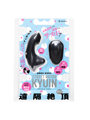
Remote-Control Quiet-Design STREET ROTOR KYUIN black — ¥2,944 (as of August 2026) — ★5.00 (1 review)
This is one example where “quiet design” is stated directly in the product name. When a manufacturer leads with that in the title or description, it’s a reasonable signal that they treat noise as a core selling point rather than an afterthought. It’s also remote-controlled, which opens it up to partner use as well.
FAQ
Does quiet mean weaker?
Not necessarily. Motor improvements over the past few years have let more products combine quiet operation with strong output — “quiet” and “weak” aren’t the tradeoff they used to be.
Is there really a big difference between wood-frame and concrete buildings?
Reinforced concrete generally sound-insulates better, but sound can still travel through plumbing and ventilation ducts regardless of the building material. Choosing a quiet-designed product is worth doing no matter what kind of building you’re in.
Products without a “quiet” label — are they automatically loud?
Not necessarily — plenty of unlabeled products are quiet enough in practice, the manufacturer just didn’t call it out. But with less information to go on, you’ll need to lean more on reviews, so for a first purchase, something explicitly marketed as quiet is the safer bet.
Bottom line
Japan’s emphasis on quiet-designed adult toys traces directly back to thin-walled apartment living. Check how often reviews mention noise, and pick something that matches your actual living situation.

コメント