Disclosure: This post contains affiliate links. We may earn a commission at no extra cost to you.
Disclosure: This post contains affiliate links. We may earn a commission at no extra cost to you.
If a rechargeable toy stops working after a year or two, the motor is usually fine — the internal lithium-ion cell has simply worn out. The three habits that cause this are easy to fix: never store it fully charged, never store it fully empty, and never leave it somewhere hot. That last one matters more in Japan than in most countries, because apartments here are rarely centrally air-conditioned and a closed room in August can climb well past 35°C. This guide covers what charge level to store at, where to put a toy in a small Japanese apartment, how to stop alkaline batteries from leaking, and — the part most guides skip — how to legally throw a lithium-ion toy away once it does die.
- Rechargeable vs battery-powered: know which one you own
- The three things that kill a rechargeable toy
- A three-step routine before long-term storage
- Stopping battery leaks in dry-cell toys
- When it will not charge: work through this list first
- Throwing away a lithium-ion toy in Japan
- Rechargeable models that are easy to maintain
- FAQ
- Summary
- Related Articles
Rechargeable vs battery-powered: know which one you own
Adult toys sold in Japan split into two power types: sealed rechargeable units with a built-in lithium-ion cell, and units that take removable dry-cell batteries (AA, AAA, or button cells). They fail in completely different ways, and the storage routine for each is different. Check yours before reading further.
| Factor | Rechargeable (built-in lithium-ion) | Battery-powered (dry cells) |
|---|---|---|
| What degrades | The sealed internal cell. Not user-replaceable | Only the batteries. Swap them and it is new again |
| Typical lifespan | Roughly 300–500 charge cycles — several years at weekly use | The body lasts indefinitely unless a cell leaks |
| Before long storage | Bring the charge down to around 50–60% | Take the batteries out completely |
| Biggest risk | Heat plus a full charge, sitting untouched for months | Leaked electrolyte corroding the contacts |
| Waterproofing | Charge port must be bone dry before it touches a cable | Battery-door gasket hardens over time and lets water in |
| Best for | People who use toys regularly and want one cable for everything | People who use toys rarely and store them for long stretches |
Counterintuitively, if you use a toy once a month or less, a battery-powered model is easier to own. A rechargeable cell degrades on its own whether you use it or not, while a battery-powered body sitting empty degrades almost not at all. If you use one several times a week, rechargeable wins on running cost and on consistent motor power as the charge drains.
The three things that kill a rechargeable toy
1. Storing it at 100%
A lithium-ion cell held at full charge sits under constant internal stress. The single most damaging routine is the most natural one: finish using the toy, plug it in until it is full, then leave it in a drawer for four months. This is the same reason modern phones offer an “optimized charging” or “80% limit” setting.
2. Storing it at 0%
Draining it completely is no better. Lithium cells self-discharge slowly even when switched off, and if the voltage falls below the protection circuit’s floor, the toy will refuse to accept a charge at all. That is the real cause behind most “I pulled it out after a year and it’s totally dead” complaints.
3. Storing it somewhere hot
This is where living in Japan changes the calculation. Most apartments here have no central air conditioning — you cool the room you are in, and everything else bakes. A sealed 1K or 1R apartment during a Tokyo or Osaka summer regularly exceeds 35°C indoors, and the upper shelf of an oshiire closet, which has almost no airflow, runs hotter still. Lithium-ion degradation accelerates sharply with temperature, so “fully charged, in a closed closet, all summer” is close to the worst-case combination.
In a small apartment, the coolest spots are near the floor: an under-bed storage box, or the bottom shelf of a closet, away from any window that gets direct sun. For a fuller treatment of where to keep things discreetly, see our guide on how to properly store adult toys.
A three-step routine before long-term storage
Step 1: Clean it, then dry it completely
Washing before storage is a given, but the part people miss on rechargeable toys is the charge port. Magnetic pins and exposed contacts corrode if metal meets metal while moisture is still present, and Japan’s humid summers make this worse than it would be in a drier climate. After washing, blot the contacts with a dry cloth and leave the toy in open air for several hours before plugging anything in. Our cleaning and care guide covers the washing itself.
Step 2: Set the charge to roughly 50–60%
A cell at mid-charge sits under the least stress. Most toys have no percentage display, so precision is not the point — charge it fully, then run it at your usual intensity for a few minutes to take the edge off. Avoiding 100% and 0% matters far more than hitting an exact number.
Step 3: Top it up every three or four months
If the toy is going into storage for more than six months, take it out at the change of each season and give it a short charge. This is what prevents the over-discharge failure described above. Setting a repeating reminder in your phone calendar is enough — you will not remember otherwise.
Stopping battery leaks in dry-cell toys
The most common failure in battery-powered toys is leakage from cells left inside for months. Once electrolyte corrodes the contacts in the battery compartment, fresh batteries will not restore the connection, and the toy is finished.
- Remove the batteries when you finish. If the next use is more than a few weeks away, this one habit prevents most failures
- Never mix old and new cells. Mismatched charge levels push one cell into over-discharge, which is exactly when leaks happen
- Do not leave alkaline cells in for the long term. Alkaline electrolyte is caustic and attacks both metal contacts and plastic housings
- Inspect the battery-door gasket. On waterproof battery-powered toys, the rubber seal hardens with age. Check for cracks and flat spots each time you open it
If you would rather not buy dry cells constantly, rechargeable NiMH cells (Panasonic’s Eneloop line is sold in essentially every Japanese electronics store and convenience-store-adjacent chain) are a reasonable substitute. Be aware that NiMH sits at a slightly lower voltage than alkaline, so some toys will feel a little weaker on them.
When it will not charge: work through this list first
Before you write the toy off, rule out the cheap failures. A surprising share of “dead” toys are recoverable.
- Suspect the cable and the power source. Try a different USB cable and a different adapter. Proprietary magnetic charging cables break far more often than the toys they charge, and a replacement is a fraction of the cost of a new toy
- Clean the contacts. Dried lubricant or skin oil on the pins blocks the connection. A dry cotton swab is usually enough
- Leave it plugged in longer than feels reasonable. A deeply discharged cell can need 30 to 60 minutes before it shows any sign of life
- Check what the indicator light actually means. Whether a blinking LED signals “charging” or “fault” is reversed between brands, so the manual is the only reliable source. If your toy came with a Japanese-only manual, the model number plus 充電 in a search will usually surface the answer
If none of that works, the cell has reached end of life. Do not open the toy to replace it — the internal cell is not designed for user access, opening it destroys the waterproof seal, and damaged lithium cells present a genuine fire risk.
Throwing away a lithium-ion toy in Japan
This is the step that catches foreign residents out, so it is worth being specific. In most Japanese municipalities, a product containing a built-in lithium-ion battery cannot go into moenai gomi (non-burnable waste). Crushed lithium cells have started fires in collection trucks and sorting facilities, and local rules have tightened accordingly.
Your options, in rough order of convenience:
- A recycling box at an electronics retailer. Large chains such as Bic Camera and Yodobashi Camera host JBRC collection boxes for rechargeable batteries and small rechargeable devices
- Your ward or city office’s small-appliance collection. Many municipalities run shō-gata kaden collection bins in public buildings. Check your ward’s garbage guide, which is generally published in English as well as Japanese
- Never put it out on a normal collection day “just in case.” If the housing is cracked or the toy is visibly swollen, treat it as a fire hazard and take it to a proper collection point promptly
If discretion is a concern, remove the toy from any branded packaging and place it in an opaque bag before dropping it in a collection box. Staff do not inspect these bins item by item.
Rechargeable models that are easy to maintain
If you are buying now, checking the charging method and waterproof rating up front saves trouble later. The models below all have real review histories on FANZA. Prices and ratings are as of August 2026, and note that Japanese mains power is 100V — a charger brought from home may or may not be rated for it, so a locally bought USB adapter is the safer choice.
| Product | Price | Rating (reviews) | Best for |
|---|---|---|---|
| Rei no Denma Black (p-131) | ¥1,356 | 4.22 (9) | Trying a rechargeable model for the first time |
| Kizuna Collection QUEEN’S Rotor | ¥3,630 | 4.43 (7) | Anyone who needs something small and easy to store |
| nemo G Neo Rechargeable Remote Rotor | ¥3,872 | 3.60 (5) | People who want remote operation included |
Rei no Denma Black (p-131): the low-risk entry point
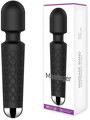
At ¥1,356 this is the cheapest of the three, and it carries the most reviews — 9, averaging 4.22. A smaller battery is not purely a drawback here: it reaches a full charge quickly, which suits a top-up-often pattern rather than long unattended charging sessions. A sensible way to learn the charging routine without much money at stake.
View Rei no Denma Black on FANZA
Kizuna Collection QUEEN’S Rotor: small enough to store properly
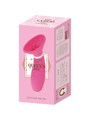
¥3,630 with the highest average of the three at 4.43 across 7 reviews. The practical advantage of a rotor-format toy is that it fits inside a case that will slide under a bed or onto the bottom shelf of a closet — precisely the cool, dark spots that extend battery life in an apartment with no whole-home cooling. For more on compact formats, see our travel-friendly compact toys guide.
View Kizuna Collection QUEEN’S Rotor on FANZA
nemo G Neo Rechargeable Remote Rotor: remember the remote has a battery too
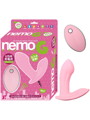
¥3,872, averaging 3.60 across 5 reviews, and explicitly marketed as a rechargeable model. The trap with remote-controlled toys is that the main unit is rechargeable while the remote itself runs on a coin cell. When you put the set into storage, adjust the main unit’s charge and pull the coin cell out of the remote if the housing allows it. Our remote-control and app-connected toys guide goes deeper on this category.
View nemo G Neo Rechargeable Remote Rotor on FANZA
FAQ
Can I use a toy while it is charging?
Unless the manual explicitly permits it, no. Most rechargeable toys are not designed for use while connected, the charge port is exposed during charging, and the waterproof rating does not apply in that state.
Do I need to fully charge a new toy before first use?
Lithium-ion cells need no conditioning cycle — the “fully discharge then fully charge a new battery” advice comes from older NiCd chemistry and does not apply. That said, stock that has sat in a warehouse may arrive partly drained, so one full charge at the start gives you a baseline for how long it actually runs.
Can I charge from a power bank?
Yes, if the output is standard USB. A high-wattage fast charger will not necessarily speed things up, because small toys limit the current they will draw internally. An ordinary USB adapter is fine.
Is a toy I have not touched in several years still safe to use?
Inspect it first. If the body looks swollen or deformed, or the outer shell has cracked, do not power it on — a swelling lithium cell is a fire risk. Take it to a battery collection point instead, following the disposal guidance above.
What are the rules for flying home with one?
Devices with built-in lithium-ion batteries generally must travel in carry-on baggage rather than checked baggage. Import legality also varies by destination country, so check before you pack — our guide on carrying adult toys across borders covers this in detail.
Summary
Keeping a rechargeable toy alive comes down to four habits. Wash it and let it dry completely, including the charge port. Store it at roughly half charge rather than full or empty. Keep it low and out of the sun rather than in a sealed closet that bakes all summer. And if it runs on dry cells, take them out. Those four steps prevent the overwhelming majority of both cell degradation and leak damage.
If you have a toy sitting fully charged in a closet right now, take it out and look at it. As long as it is not swollen, running it down a little and moving it somewhere cooler will measurably extend how long it lasts.

コメント